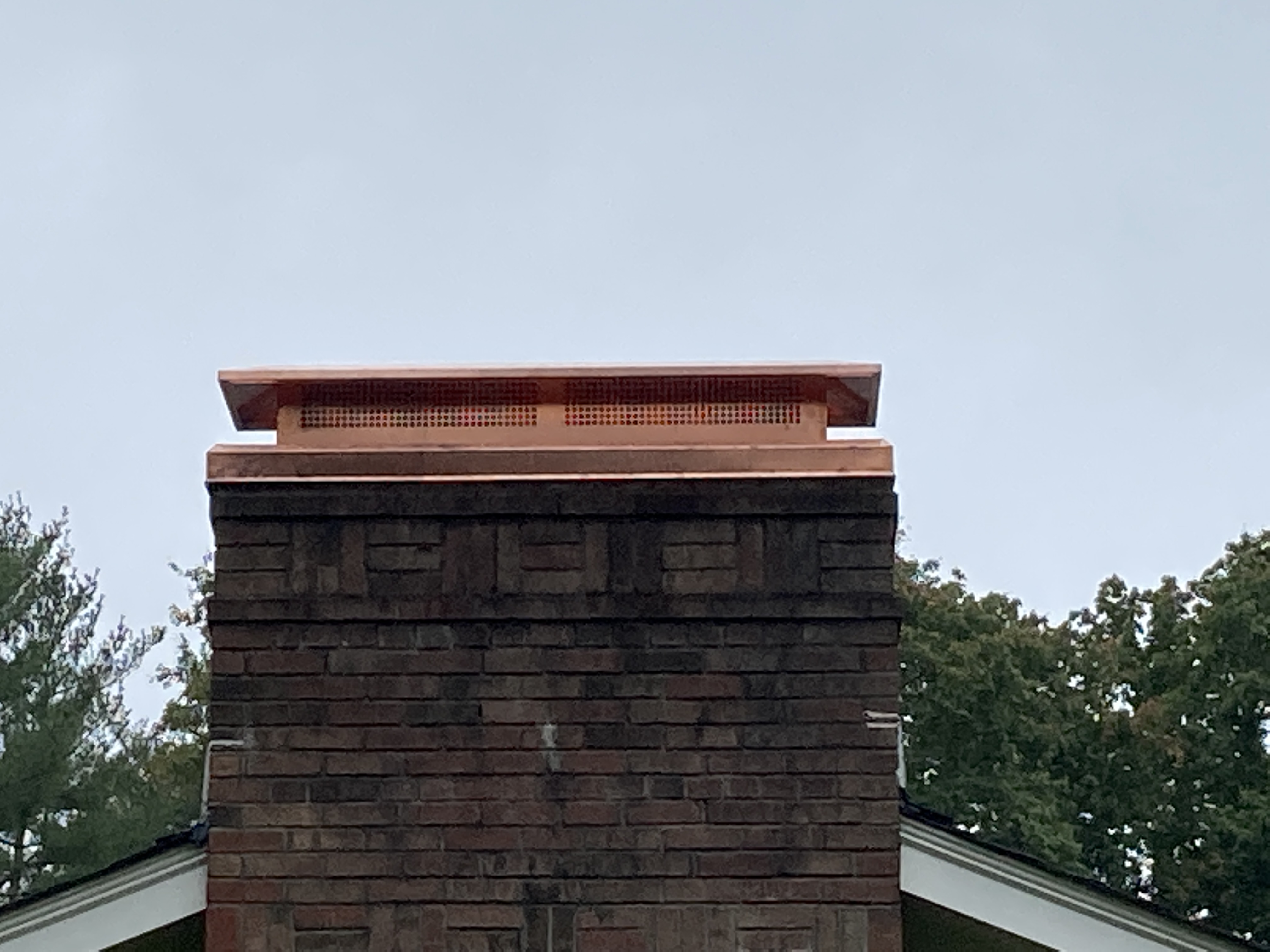
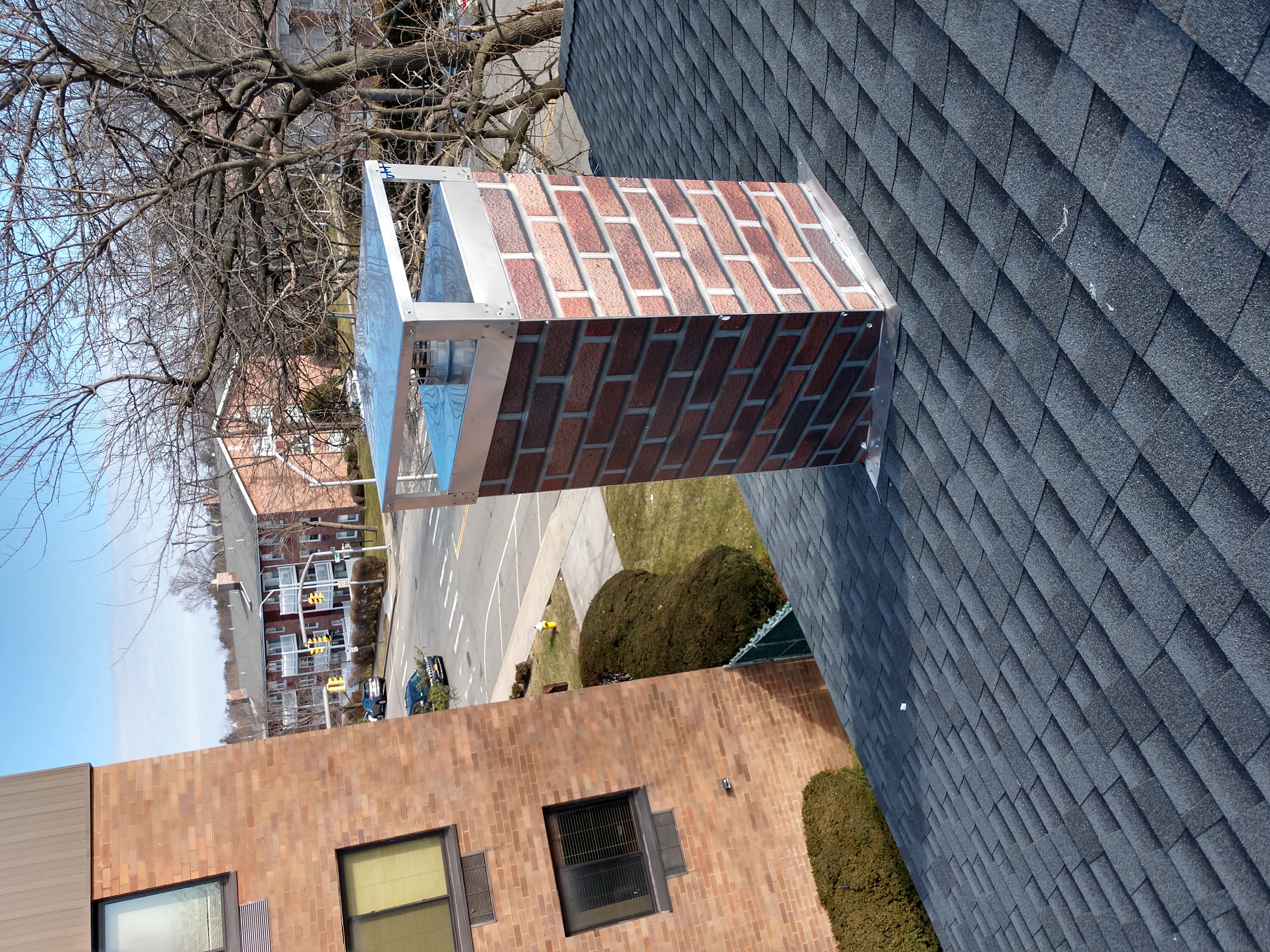
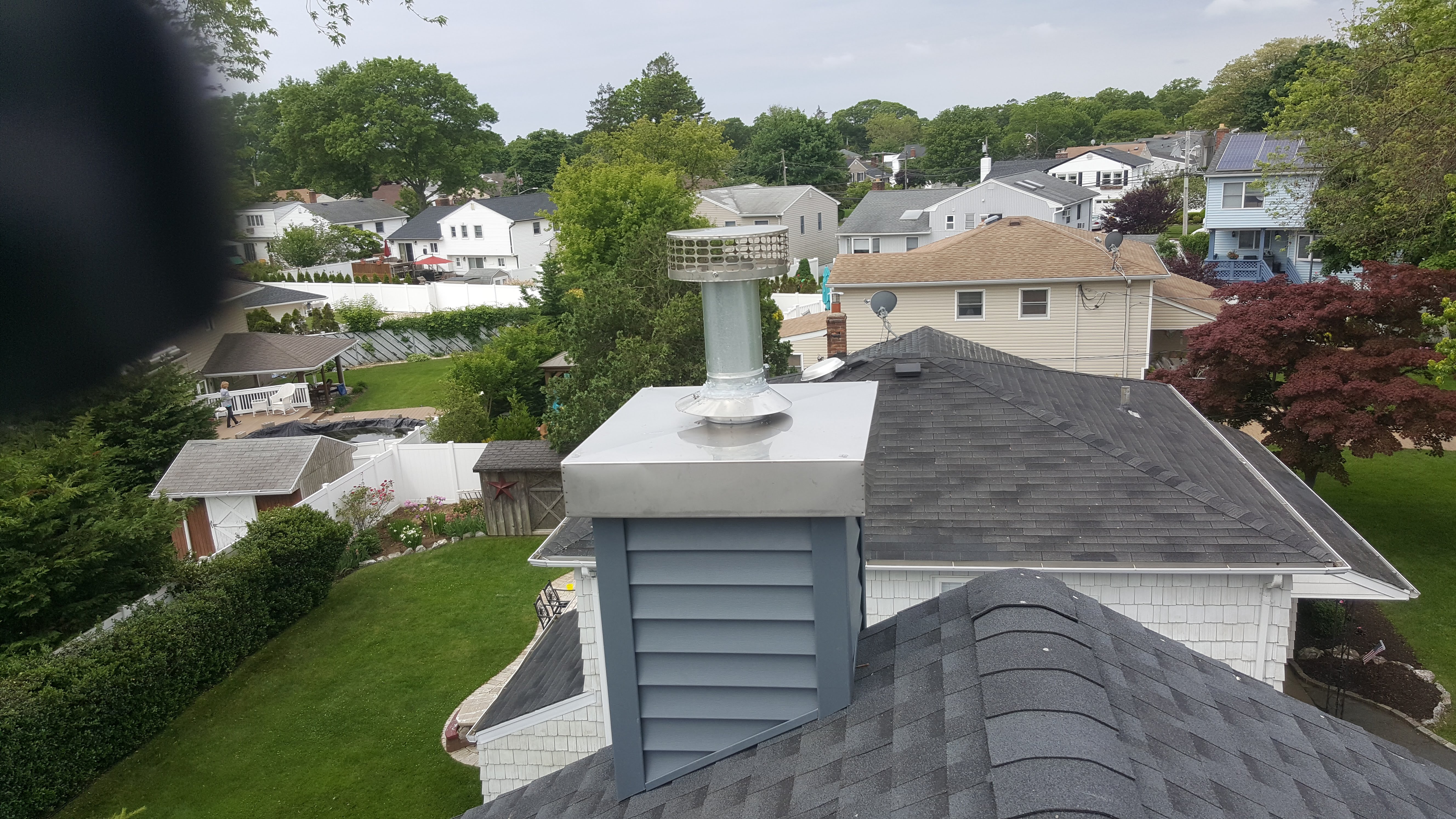
Your chimney crown does one job, and it does it every single day. It sits at the very top of your chimney and sheds water away from the flue opening, directing rainfall down and outward before it has any chance to seep inside. Port Washington residents have seen what happens when that crown fails. Water finds its way down into the flue, saturates the masonry, and before long you're looking at rust on your damper, spalling bricks, and deteriorating mortar joints. The crown is the gatekeeper. When it cracks, when it erodes, or when it was never built properly in the first place, everything below it becomes vulnerable. Most homes in Port Washington were built in the mid-twentieth century, and many original crowns have simply reached the end of their useful life. That's not a failure of craftsmanship from decades ago. That's just what happens when concrete and mortar face endless cycles of freezing, thawing, and exposure to Nassau County, NY weather.
The crown sits in one of the harshest environments on your entire house. It faces direct sun exposure in summer, which causes expansion. Then winter arrives, and Port Washington temperatures drop below freezing, causing contraction. Rain falls, freezes, thaws, and falls again. Snow accumulates on the crown and melts during occasional warm spells. Homes in Port Washington also sit close to Long Island Sound, which means salt air and moisture are constant companions. That corrosive environment doesn't just age a crown slowly and gracefully. It creates cracks. These aren't hairline fractures that stay dormant. A crack in your chimney crown becomes a pathway for water. Rain doesn't just sit on top of the crown waiting to evaporate. It actively seeks the lowest point and the easiest entry, and a crack is an invitation.
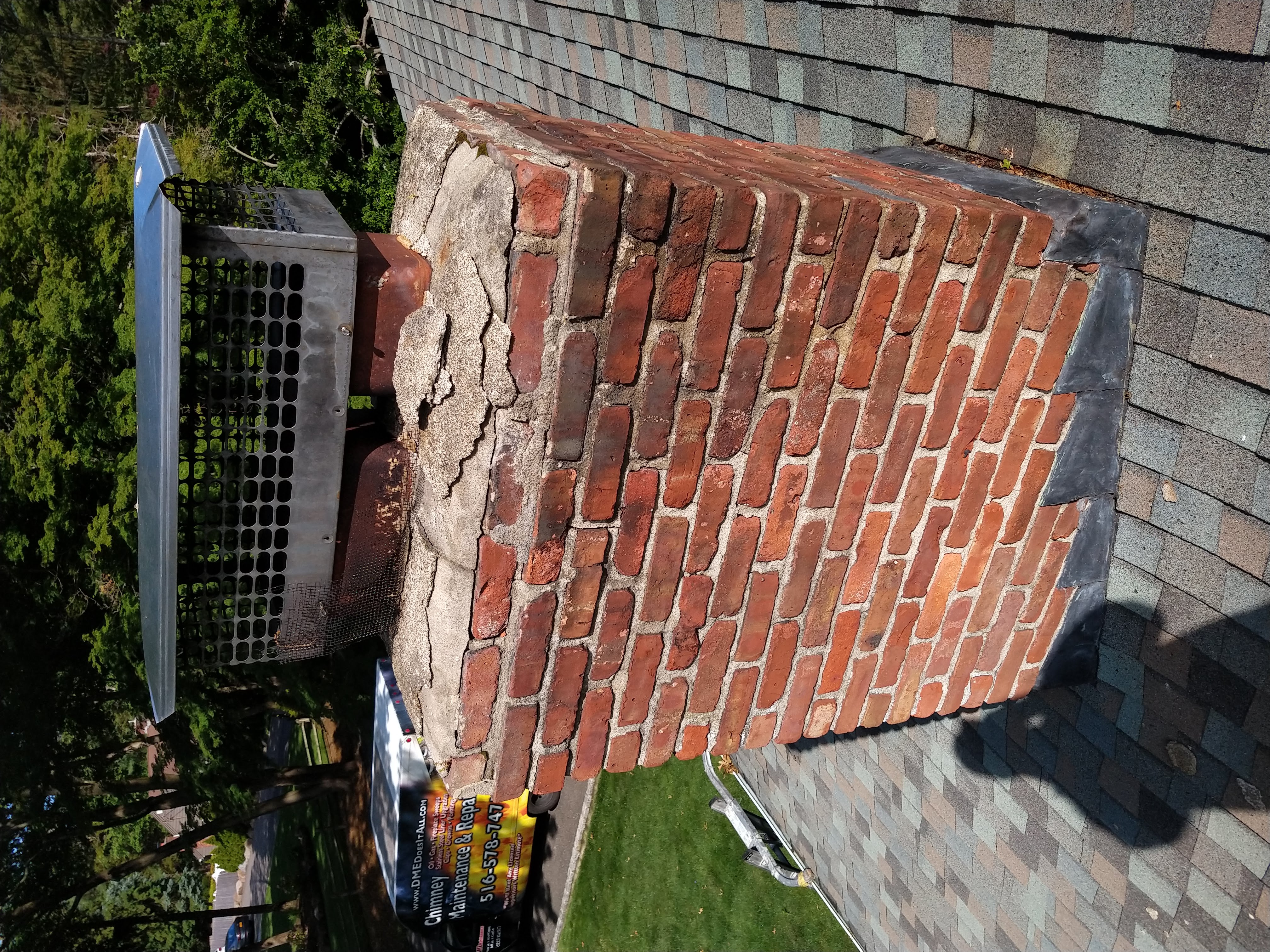
When water breaches the crown and enters the chimney structure, the damage spreads quickly in ways that aren't always visible. Water moves down the sides of the flue tile and into the surrounding masonry. It seeps into the mortar joints. It saturates the brick. Once water is inside, it stays inside longer than you might expect, especially during Port Washington's wetter months and during the rainy season that precedes winter heating. That trapped moisture then encounters freeze-thaw cycles again. Ice forms inside the masonry, creating pressure that causes spalling, where the outer face of the brick breaks away in chunks. Port Washington homeowners often don't notice this damage until it's advanced, because much of it happens where you can't see it from the ground. By the time you spot a problem, the damage inside the chimney structure may already be significant.
The crown's design matters just as much as its condition. A properly built crown should slope away from the chimney in all directions, creating a natural shed for water. It should overhang the top of the chimney by at least one to one and a half inches. This overhang is critical because it keeps water from running down the outside of the chimney masonry. Many older crowns in Port Washington don't have adequate overhang, or they're nearly flat rather than sloped. Some were built from mortar alone, without the concrete base that provides real durability. These crowns fail faster because they were fighting an uphill battle from the day they were installed. We see this pattern constantly on Port Washington homes built before the 1980s. Rebuilding a crown isn't just about patching what's cracked. It's about getting the slope and overhang right this time.
Cracks in the crown can vary widely in character. Some are visible as single lines running across the surface, often radiating from the center flue opening. Others appear as a network of smaller cracks, sometimes called map cracking, where the surface looks fractured in multiple directions. Some crowns are so deteriorated that pieces are actually missing. Each pattern tells a story about what's been happening on top of your chimney. A radial crack, for instance, often forms because the concrete wasn't properly mixed or installed, or because it experienced heavy stress during initial curing. Port Washington homeowners might see map cracking develop over years as the crown experiences repeated freeze-thaw cycles. A missing section means water has been entering for some time. The point is that not all cracks are equal, and the solution depends on what's actually happening.
The timing of crown repair matters. If you wait until the rainy season arrives or until winter heating season begins, you're already playing catch-up. Water is actively entering your chimney at that point. The damage is beginning or already underway. Smart Port Washington residents address crown issues before heavy rains start in fall and before the heating season puts your chimney to work. If you have an oil heating system, which many homes on Long Island do, your chimney sees constant use during winter months. You want the crown intact before those cold months arrive. We recommend inspecting the crown in late summer or early fall. That timing lets you identify problems and schedule repair before weather patterns shift. It's the difference between being proactive and being reactive, and reactive repairs often cost more because secondary damage has already occurred.
Water entry from a compromised crown doesn't just affect the masonry. It affects your entire chimney system. The damper can rust if water drips onto it. The firebox can deteriorate. Flue tiles can develop cracks from freeze-thaw stress. The basement or crawl space area around the chimney base can develop moisture problems. In homes where the chimney runs through interior walls, water damage can even affect wood framing over time. We've seen insurance issues arise where water damage was attributed to a failed crown. Port Washington homeowners sometimes assume these problems are separate, unrelated issues, but they often trace back to one source: a failed crown. Fixing the crown stops the water entry at the source and prevents these cascading problems from developing further.
DME Maintenance serves every street in Port Washington. We have been cleaning chimneys on Long Island long enough to know exactly what local homes need — from older clay-lined flues in pre-war houses to modern stainless steel liner systems in newer construction.
DME Maintenance has been serving Port Washington and Nassau County, NY since 2001. Douglas Eberling and our licensed technicians understand the specific challenges that chimney crowns face on Long Island. We've rebuilt crowns on homes ranging from Baxter Estates to Beacon Hill to the waterfront properties overlooking Long Island Sound. We know what weather patterns on Port Washington homes demand from a crown, and we know what it takes to build one that will last. When we rebuild a crown, we're not just filling in cracks. We're creating a durable, properly sloped cap with adequate overhang that will shed water effectively for decades. If your crown has minor surface cracking, we can sometimes repair rather than rebuild, saving you time and expense. But we won't recommend a repair if a rebuild is actually what's needed. We're honest about what we find.
Don't wait for the rainy season to catch you unprepared. Contact DME Maintenance today at 516-690-7471 to schedule a crown inspection. If you're a Port Washington homeowner and you haven't had your chimney crown evaluated in the past few years, now is the time. Fall is arriving, winter isn't far behind, and once those heavy rains and cold temperatures arrive, a failed crown becomes an active problem. Call 516-690-7471 and let us show you what's happening at the top of your chimney.